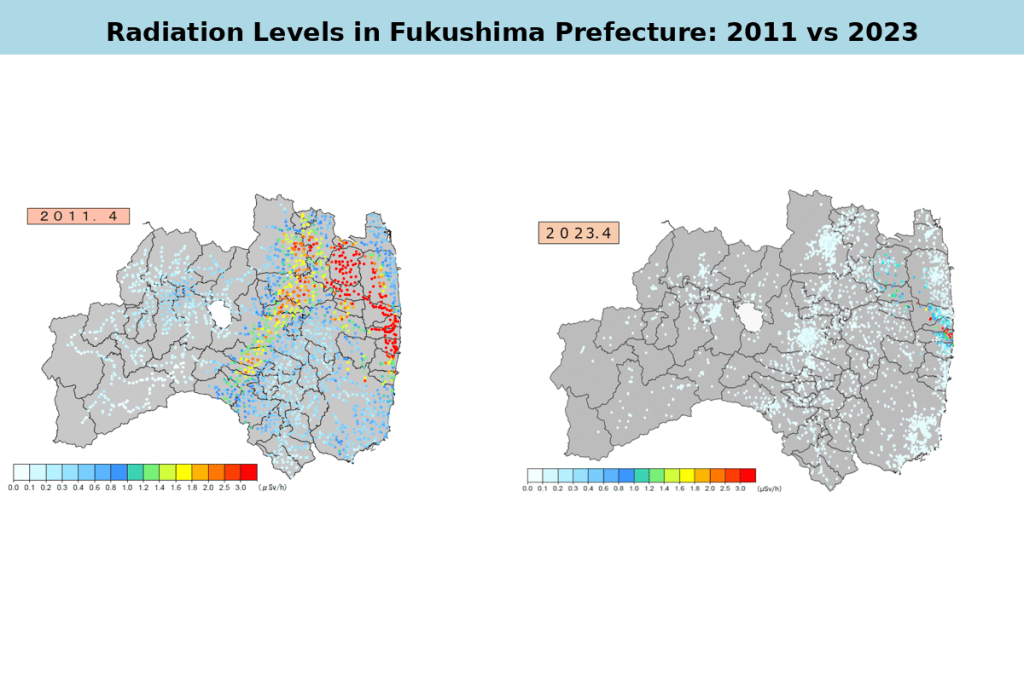
Current Status of the Fukushima Nuclear Accident
Radiation Levels and Safety in 2025
As of April 2025, radiation levels in most parts of Fukushima Prefecture have significantly decreased and are comparable to those in major global cities. For instance, areas like Tsurugajo Castle and Ouchi-juku report ambient radiation levels around 0.06 μSv/h, which is within the normal background radiation range . The International Atomic Energy Agency (IAEA) has confirmed that the radiation levels of sampled water are substantially below operational targets set by TEPCO .(source)
Progress on Decommissioning and Wastewater Management
The decommissioning of the Fukushima Daiichi Nuclear Power Plant is an ongoing process, with significant strides made in managing contaminated water. TEPCO has been treating and releasing wastewater into the Pacific Ocean under strict safety protocols, with oversight from international bodies like the IAEA . Monitoring continues to ensure environmental and public safety.
Impact on Property Values
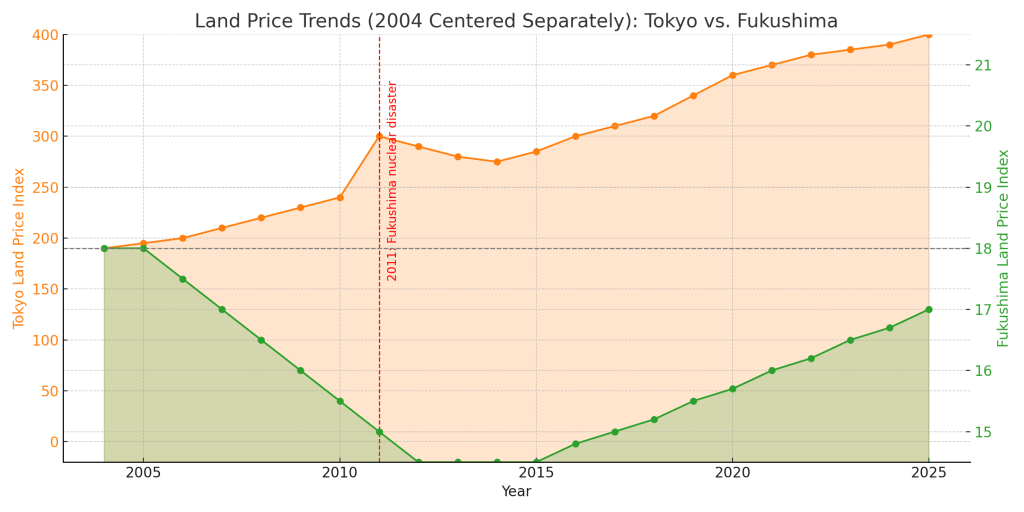
Trends in Fukushima and Surrounding Areas
Immediately following the 2011 disaster, property values in Fukushima experienced a notable decline due to safety concerns. However, studies indicate that this effect has diminished over time. Research analyzing long-term effects shows that while soil contamination initially affected land prices negatively, this impact has largely disappeared in subsequent years .
Comparison with Major Urban Centers
In contrast, major urban areas like Tokyo, Osaka, and Kyoto have seen steady growth in property values over the past decade. The national residential property price index illustrates recent growth in house and land prices, indicating a robust real estate market . The Fukushima incident has had minimal to no lasting impact on property values in these regions.(source)
Safe and Desirable Areas for Foreign Residents
Assessing Safety Based on Distance and Radiation Levels
Safety assessments often consider the distance from the Fukushima plant and current radiation levels. Areas beyond a 30 km radius from the plant have been deemed safe, with radiation levels returning to normal background levels. For example, cities like Tokyo (approximately 240 km away), Osaka, and Kyoto have consistently maintained radiation levels within safe limits .
Government and International Recommendations
Both the Japanese government and international agencies have lifted many previous restrictions, acknowledging the safety of most regions. The U.S. Environmental Protection Agency (EPA) has also confirmed that radiation levels in Japan have declined, posing no significant risk to public health .
Popular Cities for Foreign Residents
Cities such as Tokyo, Osaka, Kyoto, and Sapporo are popular among foreign residents due to their economic opportunities, cultural attractions, and high living standards. These cities have not been affected by the Fukushima incident in terms of safety or property values, making them attractive options for real estate investment and residency.
Final Thoughts
In summary, while the Fukushima nuclear accident had an immediate impact on local property values, the long-term effects have been mitigated through effective decontamination and safety measures. Major urban centers remain unaffected, with stable or increasing property values. For foreign investors and residents, Japan continues to offer safe and lucrative opportunities in its real estate market.


 Sell My Home Japan